
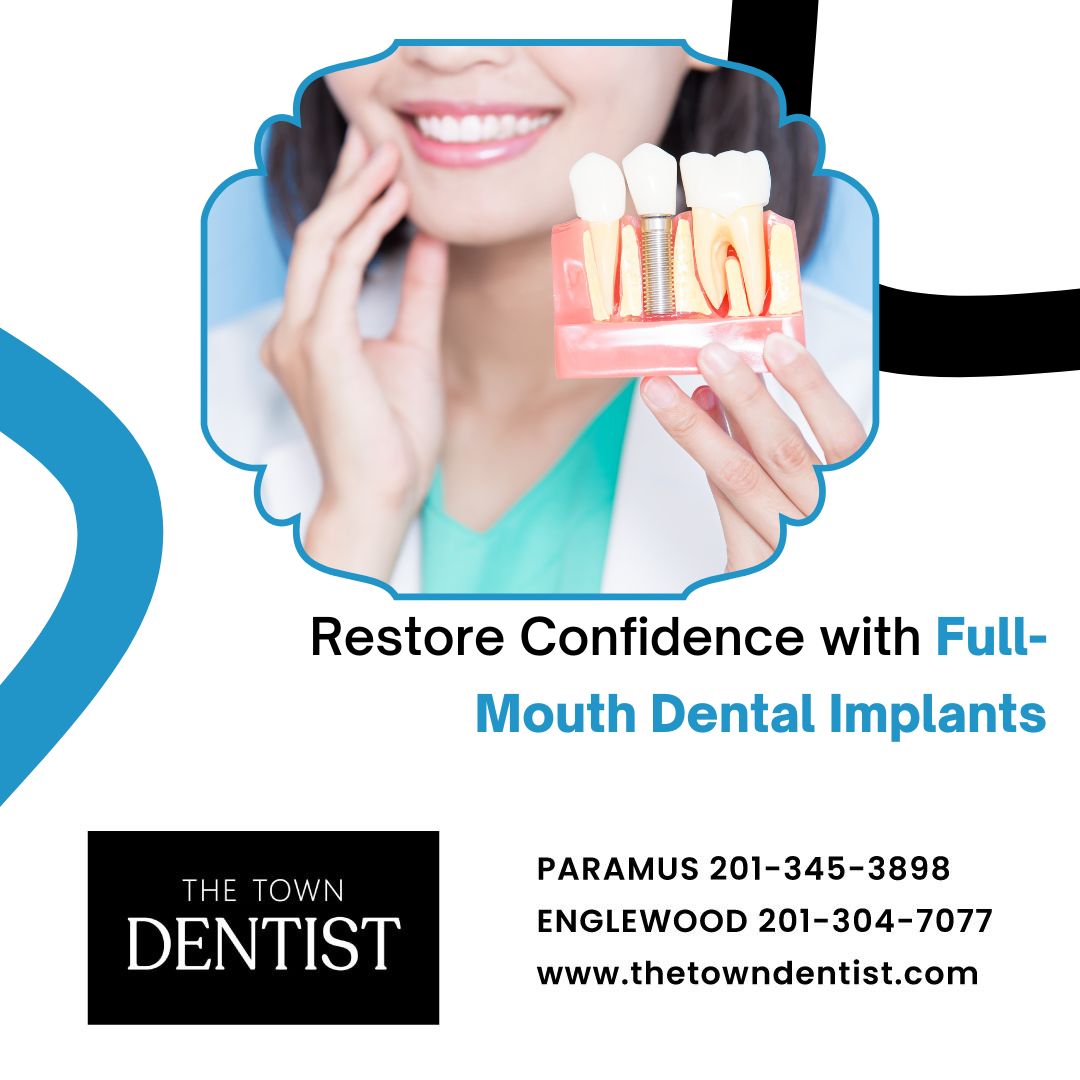
The smile is one of the first few instances by which one can ascertain having an influence on feelings, speech, and interaction with the world. But for those who have lost a majority, if not all, of their teeth, smiling may become a source of embarrassment. If you’re going through the problems of tooth loss, you’re not alone. An extremely beneficial solution is dental full mouth implants.
Full-Mouth Dental Implants: This comprehensive guide covers every bit of information about the implants—who they are for, how they work, the procedures involved, and how they can be a turning point in your life.
What Are Full Mouth Dental Implants?
Full-mouth dental implants are a complete restorative dental procedure that uses many dental implants to replace all of the upper and/or lower jaw’s lost teeth. A whole arch of prosthetic teeth is supported by four to eight implants rather than one implant for each lost tooth.
Commonly, it is best to think of the implants in these ways:
All of these consider variants of the same objective: to provide replacement teeth that are as stable and secure as they are natural in appearance and that restore full oral function.
Why Choose Full Mouth Dental Implants?
These are the reasons why many patients choose full mouth dental implants over a traditional set of dentures:
Permanent and Stable
While removable dentures can slip, implants are surgically fixed into your jawbone so as to offer a permanent fit.
Natural-Looking Appearance
The implants carry artificial teeth specially designed to look and feel like natural teeth, giving you a more natural smile.
Better Speech and Chewing
Bid farewell to slurred speech and limited food choices. Implants let you eat and speak freely.
Improved Confidence
The full and pretty smile that comes with it will turn on your social and professional confidence without any hesitation.
Are You an Ideal Candidate for Full Mouth Dental Implants?
You will be considered an ideal candidate if:
- Most or all of your teeth have been lost
- You are in good general and oral health.
- You have sufficient jawbone density (or would consider bone grafting)
- You are a non-smoker, or if you are, you are willing to quit some time before and after the surgery.
- You’re looking for a long-term solution to tooth loss.
A dental implant specialist will conduct a thorough exam, including digital X-rays and scans, to determine your eligibility.
Read More: Dental Implants vs. Dentures
Types of Full Mouth Dental Implants
1. All-on-4 denta implants
- Four implants per arch
- Angled placement for those with low bone volume
- Minimally invasive technique with a quicker healing time
2. All-on-6/All-on-8 Implants
- Six to eight implants per arch
- Offering more support and durability
- Recommended to patients with better bone densities
3. Implant-Supported Dentures
- Removable or fixed dentures supported by implants
- More stable than regular dentures
- They may be taken away to be cleaned if they are not fix ones
The Full Mouth Implant Procedure: Step-by-Step
What often occurs throughout a complete mouth dental implant journey is as follows:
Step 1: Consultation and Planning
- General mouth examination and 3D imaging where necessary
- Review of medical history and discussion of expectations
- Custom-made treatment plan
Step 2: Tooth Extraction (if required)
- Removal of remaining unhealthy teeth
Step 3: Bone Grafting (if required)
- Bone grafting may be done to prepare for implant placement if a patient has experienced an excessive amount of jawbone loss.
Step 4: Implant Placement Surgery
- The implants, made of titanium, are surgically inserted into the jawbone
- Temporary dentures may be installed to ease the healing process.
Step 5: Osseointegration
- Over 3–6 months, the implants fuse with the jawbone in a process called osseointegration.
Step 6: Abutment Placement
- Small connectors are attached to the implants to hold the new teeth.
Step 7: Final Restoration
- Permanent, custom-fitted teeth are attache to the implants.
- Your bite and aesthetics are fine-tuned for comfort and beauty.
Read More: A Complete Guide to Full Mouth Reconstruction
Recovery Timeline
After surgery, the majority of patients can return to their regular activities in a few days. However, it may take three to six months for complete integration and healing. During this time:
- Stick to a soft food diet.
- Avoid smoking or alcohol.
- Practice excellent oral hygiene.
- Attend all follow-up visits.
Risks and Complications
While full-mouth dental implants have a high success rate (95%+), it’s important to be aware of potential risks:
- Infection
- Implant failure (especially in smokers or diabetics)
- Nerve damage
- Sinus complications (for upper jaw implants)
Choosing an experienced dentist and following aftercare instructions can minimize these risks.
Caring for Your Full Mouth Implants
Proper care ensures the longevity of your implants. Here’s how to maintain them:
- Brush twice daily with a soft-bristled toothbrush
- Use non-abrasive toothpaste
- Clean around implants using floss or interdental brushes
- Avoid chewing hard items like ice or opening packages with your teeth.
Psychological and Lifestyle Benefits
Beyond the physical transformation, full mouth implants often lead to:
- Greater self-esteem
- Improved facial aesthetics
- Enhanced quality of life
- Freedom to eat and laugh without worry
Conclusion: Start Your Journey to a Beautiful Smile with The Town Dental
For people who have lost a lot of teeth, whole-mouth dental implants provide a transformative option. They restore comfort, self-esteem, and quality of life in addition to teeth. Dental implants are the gold standard for contemporary tooth replacement because they produce long-lasting results and look natural.
If you’re ready to regain your smile and self-assurance, it’s time to speak with an experienced dental team.
At The Town Dental, we specialize in full mouth restoration using the latest implant technologies and personalized care. Our compassionate and skilled team is here to help you achieve a confident, beautiful smile—one you can wear proudly for years to come.
Book Your Appointment Now
FAQs About Full Mouth Dental Implants
Q1. Is the procedure painful?
Most patients report minimal discomfort. Local anesthesia and sedation make the procedure comfortable.
Q2. How long do full mouth implants last?
With proper care, implants can last a lifetime. The prosthetic teeth may need replacing after 10–15 years.
Q3. Can I get implants if I have diabetes or osteoporosis?
Yes, but your condition must be well-managed. Your dentist will evaluate your medical history.
Q4. How do I clean full mouth implants?
Brush, floss, and use oral irrigators as advised. Visit your dentist regularly for cleanings.
Q5. What if I don’t have enough bone?
Bone grafting or zygomatic implants may be recommended to restore lost bone volume.