
Paramus
Powered & Optimized by Market Elevator
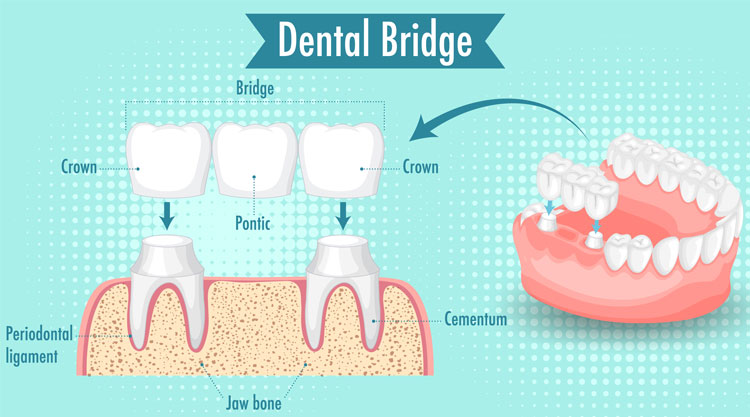
Dental bridges are a restorative dental solution used to replace one or more missing teeth. In Hackensack, NJ, patients seeking a reliable and natural-looking option to restore their smile often turn to dental bridges. A bridge consists of one or greater artificial teeth, referred to as pontics, anchored in region by using adjacent herbal tooth or dental implants. These supporting teeth, called abutments, are typically covered with crowns to provide stability and strength to the bridge.
There are numerous varieties of dental bridges to be had depending for your specific dental needs:
Opting for dental bridges in Hackensack, NJ not only enhances your smile but also helps restore proper chewing function, maintains facial shape, and prevents surrounding teeth from shifting. Our local dental specialists use high-quality materials and advanced techniques to ensure comfort, precision, and longevity.
If you’re lacking enamel and need a useful, aesthetic, and lengthy-time period solution, discuss with our Hackensack dental team to look if a dental bridge is proper for you. We’re proper right here to guide you with professional care every step of the manner.
Dental bridges aren’t one-size-fits-all! Different types exist, each with its perks. We’ll explore these bridge options to help you find the perfect fit for restoring your smile and function in Hackensack, NJ.
A traditional fixed dental bridge is a popular solution for replacing one or more missing teeth. It consists of one or more artificial teeth anchored by dental crowns placed on the natural teeth adjacent to the gap. These crowns provide strong support and restore full functionality, allowing you to chew, speak, and smile with confidence. High-pleasant substances make sure a natural appearance and lengthy-lasting durability.
An implant-supported dental bridge is a stable, long-term solution for replacing missing teeth. Instead of relying on natural teeth, this bridge is anchored by dental implants placed in the jawbone. It offers enhanced support, prevents bone loss, and restores full chewing function. Ideal for multiple missing teeth, this advanced option provides a natural look, lasting durability, and preserves your facial structure.
A cantilever dental bridge is a specialized solution used when only one adjacent tooth is available to support the restoration. In Hackensack, this type of bridge is carefully crafted to replace missing teeth without affecting surrounding healthy teeth. It’s ideal for areas with minimal bite pressure, like front teeth. With precise design and strong materials, cantilever bridges restore your smile while preserving natural tooth structure.
A Maryland bonded bridge is a conservative option for replacing missing front teeth, especially popular in Hackensack for its minimal preparation. This type of bridge uses a metal or porcelain framework bonded to the back of adjacent teeth, avoiding the need for dental crowns. It offers a natural appearance, preserves healthy tooth structure, and is ideal for patients seeking a less invasive, cost-effective restoration.
Missing tooth may have an impact on extra than absolutely your smile—they effect your chew, speech, and self belief. Dental bridges in Hackensack, NJ offer a reliable solution by restoring function and aesthetics. Discover how this remedy can beautify your oral health and standard well-being with lasting consequences.
Missing enamel can result in shifting, bone loss, and difficulty chewing. Filling the gap of missing teeth with options like dental bridges or implants helps maintain your bite, supports facial structure, and restores full functionality. Timely substitute no longer handiest enhances your smile however additionally protects your long-term oral fitness. Consult your dentist for the first-rate personalized solution.
When a teeth is lacking, the encircling tooth can progressively shift into the empty space, main to misalignment and chew issues. A dental bridge obstructs shifting teeth by filling the gap and providing essential support. This helps maintain proper tooth position, jaw alignment, and overall oral stability, preventing long-term complications and preserving your natural smile.
Missing teeth can leave gums exposed, creating pockets where food and bacteria accumulate—raising the risk of infection. Replacing teeth with a bridge or implant helps prevent gum infection by shielding vulnerable areas and promoting better oral hygiene. Restoring the gap also supports healthy tissue and reduces the chances of inflammation, decay, and periodontal disease over time.
Getting a dental bridge typically involves multiple appointments spread over several weeks. Here’s a breakdown of the process of how our dentist in Hackensack NJ works:
During your preliminary session, our dentist will very well look at your mouth and may take X-rays to evaluate your oral health. They’ll compare your enamel and jawbone to decide in case you’re a good candidate for a dental bridge. If suitable, they’ll guide you on the best type of bridge for your needs, explain the procedure, and answer all your questions—ensuring a clear, personalized treatment plan focused on long-term oral health.
During the second one appointment, your dentist starts teeth practise by reshaping the abutment tooth on both aspect of the space. This ensures a unique in shape for the dental crowns on the way to guide the bridge. Impressions are then taken to craft your custom bridge. Temporary crowns or a temporary bridge may be placed to protect the prepared teeth while your permanent restoration is being made, ensuring comfort and functionality between visits.
At your third appointment, the bridge placement process begins. Your custom dental bridge, crafted for a precise fit, is carefully positioned and bonded to the supporting teeth or implants. The dentist tests for correct chunk alignment and comfort, making essential adjustments to make certain best function. This final step restores your smile’s appearance, chewing ability, and stability, providing a long-lasting solution that blends seamlessly with your natural teeth.
Follow-up care is crucial to make certain the long-term fulfillment of your dental bridge. Your dentist will check the fit, function, and bite alignment during follow-up visits. Maintaining exquisite oral hygiene—brushing two times each day, flossing across the bridge, and the usage of encouraged equipment—enables save you decay and gum problems. Regular dental checkups allow early detection of any concerns, ensuring your bridge remains strong, stable, and comfortable for years.
The number of appointments can vary depending on the complexity of the case. For instance, implant-supported bridges may require additional implant placement and healing time procedures.
To ensure optimal results and minimize risks, it’s essential to choose a qualified and experienced dentist for the bridge procedure.
Remember: This information provides a general overview. Consulting with our dentist for dental bridges is essential to understand the specifics of your situation and the dental bridge process tailored to your needs.
Frequently Asked Questions on Dental Bridges
The best dental bridge depends on your unique oral health needs. Traditional bridges are reliable for strong adjacent teeth, while cantilever bridges work when support is available on only one side. Maryland bonded bridges are ideal for front teeth with minimal prep, and implant-supported bridges offer unmatched durability and bone support. A dental evaluation will determine the most effective option for your smile, function, and long-term health.
A well-maintained tooth bridge can last 10 to 15 years or longer. Its longevity depends on the quality of materials, oral hygiene, and regular dental checkups. Proper care—like brushing, flossing, and avoiding hard foods—helps extend the life of your bridge and supports overall oral health.
In many cases, dental implants are taken into consideration higher than dental bridges. Implants replace both the tooth and root, preserving jawbone health and not relying on adjacent teeth for support. They offer greater durability, a more natural feel, and can last a lifetime with proper care—making them a superior long-term solution.
The great type of dentist for dental bridges is a prosthodontist—a specialist in restoring and replacing tooth. However, experienced general dentists with advanced training in restorative dentistry can also provide excellent care. They determine your oral health, customize the bridge, and ensure lengthy-time period feature and aesthetics.
Yes, a dental bridge is a good option for front teeth, especially when aesthetics and function are important. Options like a Maryland bonded bridge or a traditional bridge can restore your smile with natural-looking results. They fill the gap, support speech, and maintain alignment, all while preserving your facial appearance and confidence.