
Paramus
Powered & Optimized by Market Elevator
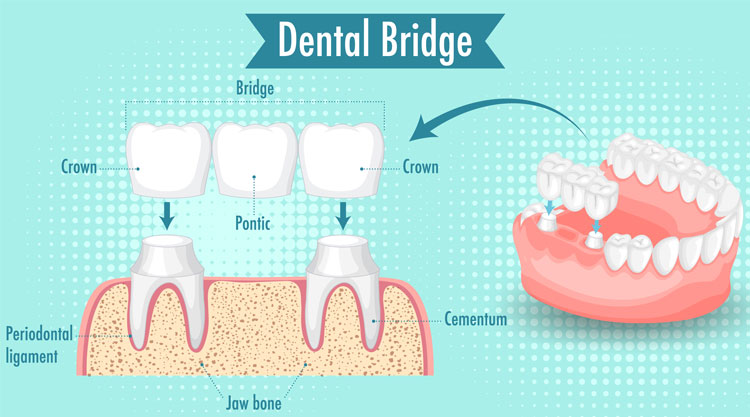
Missing teeth can be a concern for both aesthetics and oral health. A dental bridge offers a strong, stable, and permanent solution to replace missing teeth and restore your smile’s function.
Are you looking for Dental Bridges in Paramus, NJ? If you’re considering dental bridges to restore your smile and oral health, consult our experienced dentist in Paramus, NJ. They can assess your needs and determine if dental bridges are the right solution.
Dental bridges aren’t one-size-fits-all! Different types exist, each with its perks. We’ll explore these bridge options to help you find the perfect fit for restoring your smile and function in Paramus, NJ.
It consists of dental crowns on both teeth flanking the gap, with artificial teeth in between. Our dentist for dental bridges bonds the crowns to the natural teeth on either side of the gap, and the artificial teeth fill in the space between.
Dental implants are surgically inserted into the jawbone and anchor the artificial teeth. Implant-supported bridges offer the most stable and long-term solution for replacing missing teeth. However, they also require a surgical procedure for implant placement.
A cantilever bridge uses a single crown on the tooth next to the gap to support the artificial tooth. This option is used when only one healthy tooth is next to the missing tooth.
This type of bridge uses a metal or porcelain framework bonded to the backs of the teeth on either side of the gap instead of crowns. Maryland bonded bridges are a more conservative option than traditional bridges because they require less modification of the abutment teeth. However, they may be weaker than conventional bridges and may not be suitable for all areas of the mouth.
Missing teeth can impact your smile and functionality. Dental bridges offer a compelling solution. They restore your smile’s beauty and provide surprising benefits for your oral health and well-being. Let’s explore the advantages of dental bridges.
The most obvious reason for needing a dental bridge is to replace one or more missing teeth. Missing teeth can create gaps that make it difficult to chew and speak clearly and can even affect your facial structure. Dental bridges fill these gaps, restoring the function and aesthetics of your smile.
The surrounding teeth can shift out of place when you have missing teeth. This can lead to some problems, including misalignment, bite problems, and difficulty cleaning your teeth properly. Dental bridges help prevent this shifting by keeping the remaining teeth in their proper positions.
Dental bridges fight gum disease by eliminating food traps that harbor bacteria, keeping teeth aligned for easier cleaning, and supporting a healthy jawbone, which is crucial for gum health.
Getting a dental bridge typically involves multiple appointments spread over several weeks. Here’s a breakdown of the process of how our dentist in Paramus NJ works:
The number of appointments can vary depending on the complexity of the case. For instance, implant-supported bridges may require additional implant placement and healing time procedures.
To ensure optimal results and minimize risks, it’s essential to choose a qualified and experienced dentist for the bridge procedure.
Remember: This information provides a general overview. Consulting with our dentist for dental bridges is essential to understand the specifics of your situation and the dental bridge process tailored to your needs.
Frequently Asked Questions on Dental Bridges
Traditional bridges are the best and most popular among dental bridges. These dental bridges work well when you want to cover the gap of a missing tooth.
Our dentists for Dental bridges in Paramus NJ offer long-lasting bridges lasting 7-10 years.
Dental implants are generally considered a more permanent and natural-looking solution than bridges. They don’t require altering adjacent teeth.
Any general dentist can usually handle bridges, but some dentists have more experience in cosmetic dentistry, which can help them achieve a natural look for their front teeth.
Bridges can be good for front teeth. They can improve aesthetics, speech, and chewing function. However, healthy teeth need to be ground down to support the bridge, and there’s a risk of future decay under the bridge.