
Quick Summary: Are you confused about choosing a dentist for dental implants because you don’t know what aspect to consider when selecting? No need to worry. We have prepared a detailed blog that discusses some important aspects like credentials, track record, safety protocols, and more which will help you in selecting a dentist.
In modern times, it is normal for people to lose a tooth or some teeth. It happens because of lifestyle, eating and drinking habits, accidents, etc. With the help of dental implants, you can replace your missing tooth with a new one. Let’s start with understanding dental implants and then we will move on to aspects to consider before selecting a dentist.
Understanding Dental Implants
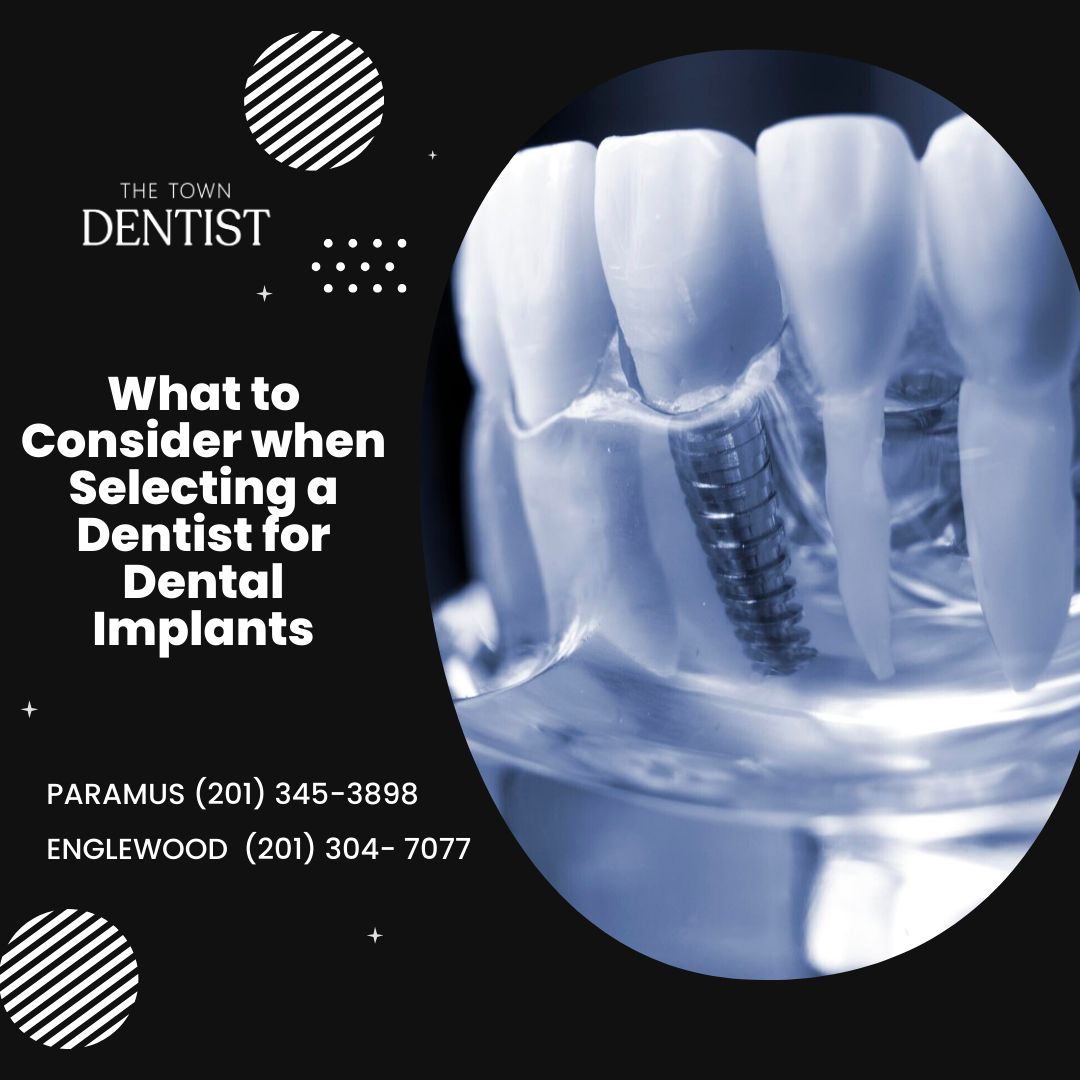
Dental implants are artificial teeth that surgically replace the missing one to fill the gaps in your smile and improve chewing function and overall oral health. Dental implants have proven to be a revolutionary innovation in dentistry. Every year millions of individuals in the USA get dental implants. Dental implants are for you if you have lost one or more teeth to an accident or injury. These dental implants are made of titanium and ceramic and are safe and biocompatible. Dental implants consist of a threaded post, abutment, and restoration.
Threaded Post: It is a type of artificial root that is placed in your mouth to support new teeth.
Abutment: It is a connector which is screwed into a threaded post and helps connect it with an artificial tooth.
Restoration: The restoration is the artificial tooth that replaces the missing tooth.
Every individual needs different types of dental implants based on the teeth that are missing. There are many types of dental implants including endosteal, subperiosteal, zygomatic, mini implants, all-on-4, single, and two-stage. Endosteal is the most common and safe dental implant. Whereas zygomatic is considered as one of the most complex dental implants. Let’s understand the main types.
Endosteal Implants: It is the most common type of implant which is also considered as one the safest type. In this implant, a titanium post is surgically inserted into the jawbone which acts as an artificial root for the new tooth.
Subperiosteal Implants: It is an alternative to endosteal implants which are used when the height of bone is not enough for endosteal implants. Here in this type, the implants are placed under the gums and over the bone.
Zygomatic Implants: It is also considered an alternative to endosteal implants like subperiosteal implants. However, in this type, the implants are surgically placed in the zygomatic or cheekbone.
Credentials and Qualifications
One of the most important things that you need to consider when selecting dentists for dental implants is their credentials and qualifications. Make sure periodontists or implantologists are highly qualified and have hands-on training. You can inquire about it on the first visit or from their website. Below we have discussed educational background to check for while choosing a dentist for dental implants.
- Make sure they have a Doctor of Dental Surgery (DDS) or Doctor of Dental Medicine (DMD) degree from a certified dental school in the USA.
- They must have additional advanced training of 3 years recognized by CODA (Commission on Dental Accreditation).
- If you are going to periodontists then ensure they are certified by the American Board of Periodontology (ABP).
- In the case of implantologists look for fellowship status from reputed institutes like the American Academy of Implant Dentistry (AAID) or the International Congress of Oral Implantologists (ICOI).
Experience and Track Record
Experience and track record are other important factors to consider when selecting a dentist for dental implants. A dental implant specialist is highly experienced and has an excellent track record. A periodontist or implantologist with 3 to 5 years of experience and hundreds to thousands of implants done is considered good. Below we have mentioned some important questions you can ask them.
- Ask them about their experience of managing complex cases like bone grafting, sinus lift, patients with conditions, or immediate implants after extraction.
- Before-and-after case photos are crucial, so ask them about it. Request x-rays or CBCT scans or outcomes of cases similar to yours.
- One of the most important questions that you must not forget to ask is about their experience of doing implants. 5 to 10 years is considered a good benchmark.
Treatment Planning
One of the most important or maybe the most important aspects that you must consider when selecting a dentist for dental implants is how they plan your treatment, and what is their approach to your condition. All dental implant specialists follow a systematic treatment plan to give you your desired results. Below we have discussed a basic way of how dental implant specialists plan your treatment.
Diagnosis
Systematic diagnosis is really necessary to plan a treatment that aligns with your goal. The dentists will assess your medical history for various conditions including heart disease, osteoporosis, diabetes, etc. Then they will run some periodontal examinations to check for overall oral hygiene. During diagnosis, they will also visualize your bone structure through 3D imaging. Once it’s all done, professionals will design a treatment plan for you addressing all your complications, needs, and smiles.
Treatment Planning
Once the treatment plan is made. The implant specialists will conduct a one-on-one consulting session with you and your family to discuss different phases of the procedure. They will tell you about the number of implants you’ll need and ask about the type and brand of implants you prefer. Here in this session, they’ll also inform you about the time it will take in the treatment.
Pre-Treatment Procedures
Pre-treatment procedures are necessary if the bone structure is not in the condition of treatment, the tooth that is to be replaced is in very bad condition or the overall oral hygiene is very poor. You will need periodontal therapy before surgery if your gums are not healthy. However, if you have good overall oral hygiene and healthy gums then dentists avoid pre-treatment procedures to save time.
Surgical Treatment
Now, it all comes down to surgical treatment. The dentist diagnosed your condition, made a treatment plan according to it, and did some necessary pre-treatment procedures. Now, you are medically fit for implants. In this step, the dentist will start by giving you local anesthesia and drill a hole in the jawbone to make a place for the threaded titanium post. Once it’s done they will place an abutment and then finally the crown will be placed. The time difference between the placement of artificial root and abutment is 3 to 6 months known as osseointegration. Once the abutment is placed then after 2 to 4 weeks the dentist will finally fix the crown.
Safety Protocols and Hygiene Standards
All dental clinics have to follow a certain hygiene standard and safety protocols. If you are going for a dental implant to a clinic make sure they are following all the safety protocols and hygiene standards. Because you might not want an infection with your dental implant like a buy 1 get 1 free offer. Below we have mentioned some safety protocols and hygiene standards that a dental clinic should follow.
- Complete sterilization of instruments through autoclaves or other sterilization methods of surgical and other instruments to make them free of microorganisms.
- Your dental operator and staff should maintain proper personal hygiene through hand washing and sensitization.
- Make sure they wear PPE (personal protective equipment) to avoid direct contact and transmission of infections.
- Disinfection of the operation room before and after the dental implants to avoid the growth of microorganisms.
Cost and Financing Options
The whole dental implant procedure is quite costly with only artificial roots ranging from $1500 to $2500. According to Statista’s report, the cost of a dental implant in the USA in 2021 was around $1500. And according to some online reports, a full mouth reconstruction costs from $30,000 to $150,000. Since the cost is heavy you will need proper financing options so that it does not become a burden on your pocket.
Personal Savings Account
If you know that you need dental implants but not right now. Then saving your money over some time is a good option. Here you don’t have to take loans or depend upon insurance, etc. It will take some time but it is indeed a good and safe option.
Dental Insurance
Before the dental implants were not covered in insurance but now they are covered. Many companies insure 100% of the dental implants whereas some insure only half of it depending on the complexity of the case.
Dental Financing
Dental financing has been one of the most common ways of paying off the dental implant cost. It is like easy monthly installments we pay for cars, houses, or other assets. You can pay them over some time with little interest.
Health Savings Account (HSA)
A health savings account can help you pay your dental implant bills efficiently. The HSA accounts are tax-free accounts which means you don’t have to pay taxes for the money you keep in it.
Flexible Spending Account (FSA)
If you have a flexible savings account then you can use it to reduce the cost burden of dental implants. With the help of FSA, you can save some dollars before your paycheck gets taxed and then use it for dental implants.
Dental Schools
Dental schools are a less preferable way but still a good way to save on dental implants. Here you won’t get dental implants done by specialists but by some freshers doing practice after their degree.
Location and Accessibility
Location is another factor that you need to consider before choosing a dentist for your dental implants. Sometimes you might find a great dentist who offers budget-friendly quality dental implants but has a clinic 10 hours away. The traveling time and cost will take away your resources for dental implants. For example, in Mexico dental implants cost much less than in the USA, but we can’t do this much traveling regularly for checkups and treatment.
We need to make sure the dentist we choose must be accessible when needed. In case of emergencies, we will be able to communicate with the dentist or visit the clinic to avoid any type of escalation in the condition. Location and accessibility should be your priority when choosing a dentist for dental implants.
Post-Procedure Care and Support
If you are choosing a dental clinic for dental implants, make sure they provide post-procedure patient-centered care, routine check-ups, and support. Dental implant specialists will guide you on maintaining good overall oral hygiene, help you manage discomfort, and check your implants from time to time. Post-procedure care and support are very crucial to make sure the implants have been placed successfully and are causing no discomfort or irritation.
Conclusion
Now, by the end of the blog, you know about what aspects to consider when choosing a dentist for your dental implant needs. Always make sure they have board certification and years of hands-on practice. They must follow all the safety protocols and hygiene standards. Also, look for your financing option as the dental implants are costly, and make sure the dental clinic is in an accessible location. If you live in NJ then you can find affordable dental implants in Paramus and Englewood, NJ. We, The Town Dentist, offer budget-friendly dental implants. We have board-certified experts with years of hands-on experience. Our patients tell us we have great hygiene and ambiance. So, what are you waiting for?
Book Your Appointment Now
People Also Ask
1. What qualifications should a dentist have to perform dental implants?
Periodontists must be certified by the American Board of Periodontology (ABP), whereas implantologists must have fellowships from reputed institutes like the American Academy of Implant Dentistry (AAID) or the International Congress of Oral Implantologists (ICOI).
2. Should I choose a general dentist or a specialist?
General dentists have normal practice and can perform simple dental implants. However, if your case is complex then you should see a specialist as they have extensive training and experience and can deal with your condition more effectively.
3. What type of technology should the dental clinic use?
A dental clinic must use modern technology like 3D imaging, digital treatment planning software, and cone beam CT scans to ensure accurate and safe results.
4. Is follow-up care included in the treatment plan?
Yes, the follow-up care is included in the treatment plan. It makes sure that you are having no irritation or discomfort after a dental implant.
5. Can I see before-and-after photos or patient reviews?
Yes, at The Town Dentist, you can see before-and-after photos and patient reviews. We maintain 100% transparency, which allows our patients to trust us.