
When it comes to addressing significant dental issues like a severely damaged or decayed tooth, you may find yourself weighing the options between a tooth implant and a root canal. Each treatment offers its own set of advantages and drawbacks, and the right choice can vary based on individual needs and circumstances. In this detailed blog post, we’ll explore both options comprehensively, including the procedures involved, their benefits, risks, costs, and long-term outcomes.
Understanding the Procedures
Root Canal:
Overview: A root canal is a dental procedure aimed at saving a tooth that has become badly infected or decayed. This process involves removing the tooth’s damaged or infected pulp (the soft tissue inside the tooth), cleaning and disinfecting the root canals, and then filling and sealing them. Finally, a crown is placed over the tooth to restore its strength and function.
Step-by-Step Procedure:
- Diagnosis: Your dentist will take X-rays to assess the extent of the damage and confirm that a root canal is appropriate.
- Anesthesia: Local anesthesia is administered to numb the affected tooth and surrounding area.
- Access Opening: The dentist drills a small hole in the tooth to access the pulp chamber and root canals.
- Cleaning and Shaping: The dentist removes the infected or damaged pulp and cleans out the root canals. The canals are then shaped to prepare them for filling.
- Filling: The cleaned canals are filled with a rubber-like material called gutta-percha to seal them.
- Restoration: A temporary crown is placed over the tooth, followed by a permanent crown after a few weeks to restore the tooth’s functionality and appearance.
Tooth Implant:
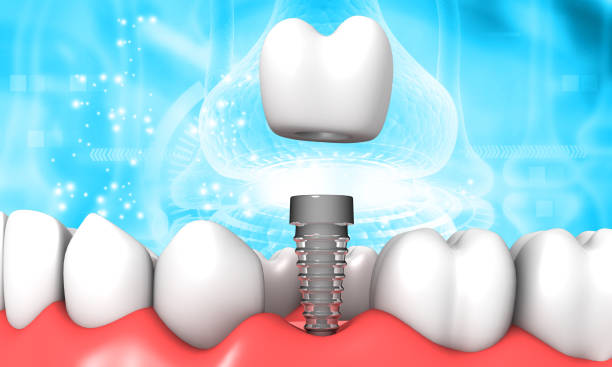
Overview: A tooth implant involves surgically placing a titanium post into the jawbone to serve as a replacement root for a missing tooth. After the implant integrates with the bone (a process known as osseointegration), a crown is attached to the top of the implant to complete the restoration.
Step-by-Step Procedure:
- Diagnosis and Planning: X-rays or 3D imaging are used to evaluate the jawbone and plan the placement of the implant.
- Implant Placement: Under local anesthesia, a small incision is made in the gum, and a titanium post is inserted into the jawbone.
- Osseointegration: The implant is left to fuse with the jawbone over several months. This process ensures a stable foundation for the crown.
- Abutment Placement: Once osseointegration is complete, a small connector called an abutment is attached to the implant.
- Crown Attachment: A custom-made crown is then placed on the abutment to complete the restoration.
Comparing Benefits and Risks
Root Canal:
Benefits:
- Preserves Natural Tooth: The primary advantage of a root canal is that it saves your natural tooth, which is often preferable to extraction and replacement.
- Functionality: After restoration with a crown, the tooth can function like any other tooth, allowing for normal chewing and biting.
- Cost-Effective: Generally less expensive than an implant, particularly when insurance coverage is factored in.
Risks:
- Potential Failure: While root canals are highly successful, there is a risk of persistent infection or damage to the tooth, requiring further treatment or extraction.
- Tooth Strength: The treated tooth is often more brittle and prone to fractures compared to healthy, untreated teeth.
Tooth Implant:
Benefits:
- Durability: Implants are designed to last many years, often decades, and can be more durable than a restored tooth.
- Aesthetics: Implants look and feel like natural teeth, providing a seamless appearance.
- No Impact on Adjacent Teeth: Unlike dental bridges, implants do not require altering adjacent healthy teeth.
Risks:
- Surgical Risks: As with any surgery, there are risks such as infection, implant failure, or complications related to the surgical site.
- Bone Density Requirements: Successful implantation requires sufficient bone density. Some patients may need bone grafts if there’s significant bone loss.
- Higher Cost: Implants are typically more expensive due to the surgical procedure and materials involved.
Cost and Insurance Considerations
Root Canal:
- Cost: The cost of a root canal varies depending on the tooth’s location and complexity but generally ranges from $500 to $1,500 per tooth.
- Insurance: Dental insurance often covers a significant portion of the cost, though coverage can vary. Root canals are usually considered a necessary procedure and are more likely to be covered.
Tooth Implant:
- Cost: The total cost of a tooth implant can range from $3,000 to $5,000 or more, depending on factors like the need for bone grafts and the type of crown used.
- Insurance: Coverage for implants is often limited. Many insurance plans may cover a portion of the cost, but patients are generally responsible for a significant out-of-pocket expense.
Long-Term Outcomes
Root Canal:
- Longevity: With proper care, a tooth that has undergone a root canal can last many years, potentially a lifetime. Regular dental check-ups and good oral hygiene are essential to maintaining the tooth’s health.
- Potential Issues: Over time, the tooth may become more susceptible to fractures or further decay if not properly cared for.
Tooth Implant:
- Longevity: Implants are known for their longevity and can last 20 years or more with proper care. They are highly durable and typically require minimal maintenance.
- Potential Issues: Implants require ongoing care to prevent issues like gum disease or peri-implantitis, which can affect the implant’s success.
Making the Decision
Choosing between a root canal and a tooth implant depends on several factors:
- Condition of the Tooth: If the tooth can be effectively restored and has a good prognosis, a root canal may be the preferred choice. If the tooth is too damaged or has a poor prognosis, an implant may be a better option.
- Bone Health: Adequate bone density is crucial for implant success. If bone loss is present, you might need additional procedures like bone grafting before an implant can be placed.
- Long-Term Goals: Consider your long-term dental health goals. Implants offer a more permanent solution but come with a higher upfront cost and longer treatment time.
- Financial Considerations: Evaluate your budget and insurance coverage. Root canals are generally less expensive and may be more affordable if insurance coverage is a concern.
- Consultation with a Professional: Consult with your dentist or oral surgeon to receive personalized advice based on a thorough examination and diagnostic imaging.
Conclusion
Both root canals and tooth implants provide effective solutions for managing severe dental issues, each with its own set of advantages and considerations. Root canals aim to save a natural tooth and restore its function, while implants offer a durable, aesthetically pleasing replacement for missing teeth. The decision between the two should be based on factors such as the condition of the tooth, jawbone health, long-term goals, and financial considerations. Consulting with your dental professional will help ensure you make an informed choice that best aligns with your dental health needs and personal preferences.
At The Town Dentist, we are committed to helping you make the best decision for your dental health. Our experienced team provides comprehensive evaluations and personalized care to guide you through the process, whether you need a root canal, a tooth implant, or another treatment. Schedule a consultation with us today to discuss your options and develop a plan that meets your needs. Your dental health is our priority, and we’re here to support you every step of the way.