
If you are missing teeth and considering dental implants, one of the first questions you may have is: Does Medicare or Medicaid cover dental implants?
The answer is not always straightforward. Coverage depends on the type of insurance you have, the specific plan, and in the case of Medicaid, the state where you receive coverage.
Understanding your benefits before starting treatment can help you know what may be covered and what you may need to pay out of pocket.
Does Medicare Cover Dental Implants?
For most people, Original Medicare does not cover dental implants.
Medicare generally does not cover routine dental care or dental items such as dentures and implants. According to Medicare, there are limited circumstances where certain dental services may be covered when they are directly connected to a covered medical treatment or serious medical condition.
For example, Medicare may cover certain dental services when they are necessary in connection with specific covered treatments, such as certain cancer treatments, organ or kidney transplants, heart valve procedures, or dialysis-related care.
However, this is different from covering dental implants simply to replace missing teeth.
What About Medicare Advantage?
Medicare Advantage, also known as Medicare Part C, is different from Original Medicare.
Medicare Advantage plans are offered by private insurance companies and may include additional dental benefits that Original Medicare does not provide. The benefits vary from one plan to another.
Some plans may provide benefits for certain dental procedures, while others may have limitations, exclusions, annual maximums, or specific requirements.
If you have Medicare Advantage, check your individual plan before assuming that dental implants are covered.
Does Medicaid Cover Dental Implants?
Medicaid works differently from Medicare.
Each state has flexibility in determining adult Medicaid dental benefits. Federal Medicaid rules require comprehensive dental benefits for children, but states decide whether and what dental services to provide to adults.
Because of this, Medicaid coverage for dental implants can vary significantly depending on where you live and the specific Medicaid plan you have.
Some state Medicaid programs provide adult dental benefits, while others provide limited services. Even when adult dental care is covered, that does not necessarily mean dental implants are included.
If you have Medicaid and are considering implants, contact your Medicaid plan and ask specifically whether implant treatment and related procedures are covered.
Why Insurance Coverage Can Be Complicated
Dental implant treatment may involve more than one procedure. Depending on your individual dental needs, treatment could involve an examination, imaging, implant placement, and placement of the final restoration.
Insurance plans may treat each part of treatment differently.
Before beginning treatment, ask your insurance provider:
- Are dental implants covered under my plan?
- Is implant placement covered?
- Is the final crown or restoration covered?
- Are there annual benefit limits?
- Is there a deductible or copayment?
- Do I need prior authorization?
- Are there exclusions for missing teeth or implant treatment?
- Are there specific dentists or specialists I must use?
Getting answers before treatment can help you better understand your potential out-of-pocket costs.
What If Medicare or Medicaid Doesn’t Cover Dental Implants?
If your insurance does not cover dental implants, you can still discuss your options with your dentist.
Depending on your situation, your dentist may be able to discuss different tooth-replacement options and payment arrangements available through the dental practice.
The right choice depends on factors such as:
- The number of missing teeth
- Your oral health
- The condition of your gums
- The amount of available jawbone
- Your overall dental needs
- Your budget and insurance benefits
A dental consultation can help determine which options may be appropriate for you.
Are Dental Implants Right for You?
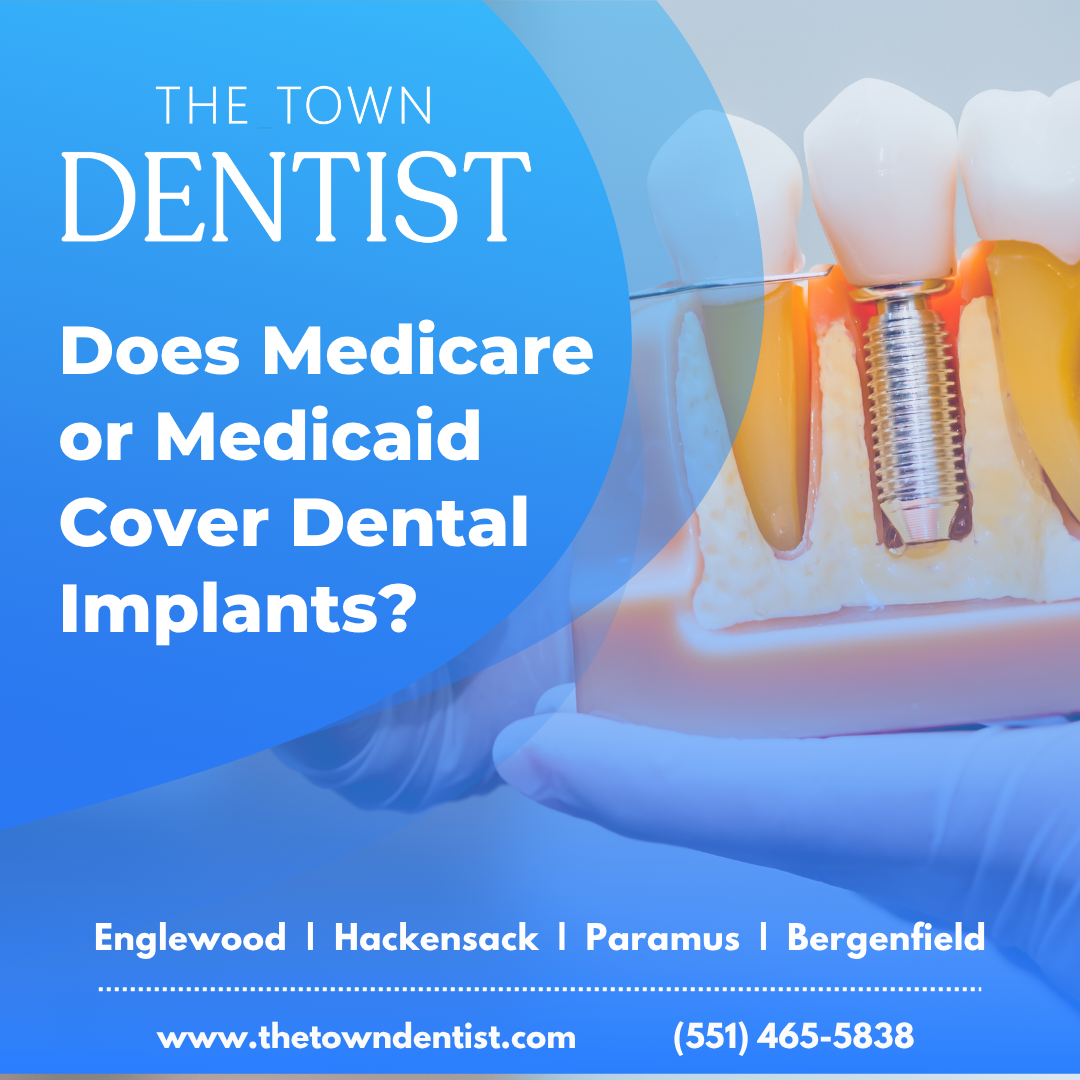
Dental implants are one option for replacing missing teeth. They use an implant placed in the jawbone to support a replacement tooth or dental restoration.
However, implants are not automatically the right solution for every patient.
Your dentist will need to evaluate your oral health and individual circumstances before recommending treatment. Additional treatment may sometimes be needed before an implant can be placed.
The goal is to develop a treatment plan based on your specific dental needs rather than choosing a solution based solely on insurance coverage.
What Should You Do Before Getting Dental Implants?
If you are considering dental implants, start by scheduling a dental evaluation.
Your dentist can examine your teeth, gums, and supporting bone and explain which tooth-replacement options may be appropriate for you.
At the same time, contact your insurance provider to understand your benefits. Ask for a written estimate of your coverage when possible so you have a clearer idea of your potential costs.
Remember that being covered by Medicare or Medicaid does not automatically determine whether dental implants are an option for you. Your dental health, treatment needs, insurance benefits, and available payment options all play a role.
Frequently Asked Questions
Does Original Medicare pay for dental implants?
Generally, no. Original Medicare does not cover most routine dental services, including dental implants. There are limited circumstances where certain dental services may be covered when they are directly related to specific covered medical treatments.
Does Medicare Advantage cover dental implants?
It depends on the plan. Medicare Advantage plans may offer additional dental benefits that Original Medicare does not, but coverage varies by plan. Check your specific policy for implant-related benefits.
Does Medicaid pay for dental implants?
There is no single answer for all Medicaid patients. States have flexibility in determining adult dental benefits, so coverage varies by state and plan.
What if my insurance doesn’t cover dental implants?
Talk with your dentist about your treatment options and ask what payment or financing arrangements may be available. Your dentist can also discuss alternative tooth-replacement options if appropriate.
How can I find out whether my plan covers implants?
Contact your insurance company and ask specifically about dental implant placement, the restoration, related procedures, deductibles, annual maximums, exclusions, and authorization requirements.
Are dental implants the only option for missing teeth?
No. Depending on your circumstances, other options may include bridges or dentures. Your dentist can explain the advantages and limitations of each option and help you determine which may be appropriate for you.
Talk With The Town Dentist About Your Options
If you are missing teeth and wondering whether dental implants may be right for you, a consultation is a good place to start.
The team at The Town Dentist can evaluate your oral health, discuss tooth-replacement options, and help you understand the treatment process.
If you have Medicare, Medicare Advantage, Medicaid, or another insurance plan, bring your insurance information to your appointment so your benefits can be reviewed as part of your treatment planning.
Schedule a consultation with The Town Dentist to learn more about your dental implant options.